October 5, 2026
What to Do When Your Car Breaks Down: 2026 Safety Guide
Table of Contents
- Immediate Safety Steps When Your Car Breaks Down
- How to Signal Other Drivers and Create a Safety Perimeter
- Calling Roadside Assistance and Communicating Your Location
- What to Do on a Busy Highway or in Extreme Weather
- Special Considerations for Electric Vehicles (EVs)
- After the Tow: Questions to Ask Your Mechanic
- How to Find a Reliable Mechanic and Handle Insurance Claims
- Conclusion: Turning a Breakdown into a Plan
- Frequently Asked Questions
Last Updated: October 1, 2026
Immediate Safety Steps When Your Car Breaks Down
A car breaks down without warning, and the first 60 seconds decide how safe you are. According to NHTSA guidance on disabled vehicles, most roadside deaths happen when drivers step into traffic lanes. A calm, practiced response keeps people out of danger. Here’s exactly what to do when your car breaks down.
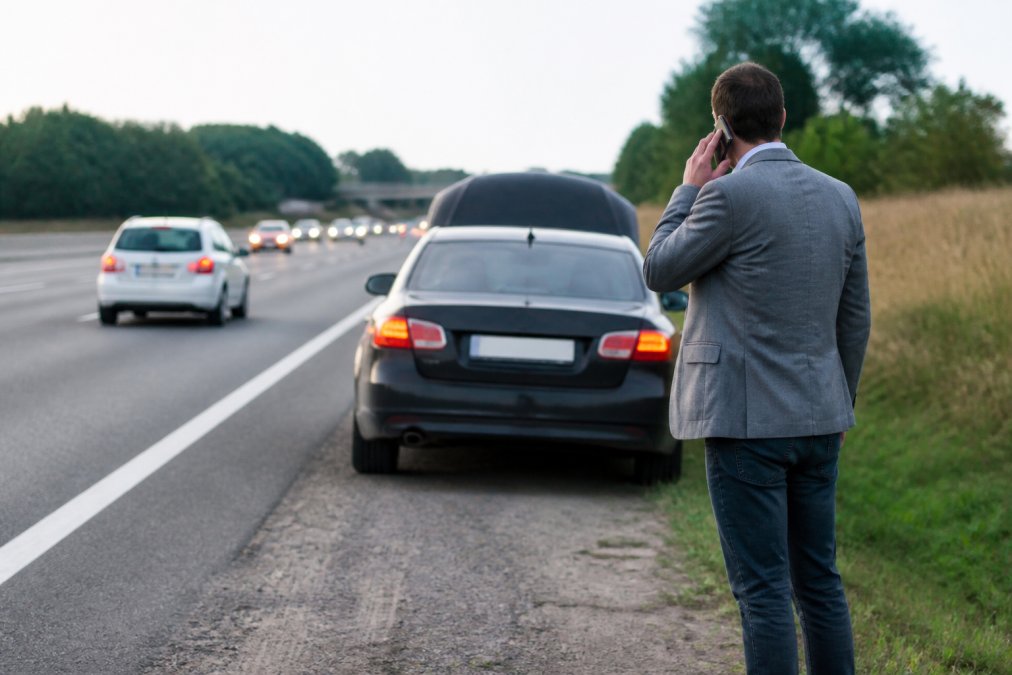
Move to the Shoulder and Turn On Hazard Lights
Get the car off the road if it still rolls. Aim for the right shoulder, away from traffic flow.
Then do these three things in order:
- Turn on your hazard lights right away
- Shift into park and set the parking brake
- Turn the wheels away from the road if you’re on a slope
Stay in the Vehicle vs. Exit: What’s Safer
Stay inside with your seatbelt on unless the car is on fire or in a live lane. A disabled vehicle offers more protection than a person standing beside it.
Standing behind your car on the shoulder is one of the most dangerous choices you can make. Drivers drift onto shoulders constantly, and a rear-end strike at highway speed is often fatal.
How to Signal Other Drivers and Create a Safety Perimeter
Making your car visible buys you time. Pop the hood to signal mechanical failure, and use whatever warning gear you carry.
Build a safety perimeter like this:
- Place reflective triangles or flares behind the car on a highway
- Put them roughly 10 feet back in town, and further out at higher speeds
- Turn on interior lights at night so your car is easy to spot
- Keep your foot off the brake pedal once you’re safely stopped
Calling Roadside Assistance and Communicating Your Location
Call for help once you’re safely stopped. Roadside assistance is the fastest path to a tow, a jump start, or fuel delivery when you’re stranded.
What to Say When You Call for Help
Give the dispatcher four things:
- Your exact location or GPS coordinates
- Your vehicle’s make, model, and color
- What went wrong, such as a tire blowout or engine overheating
- Whether anyone is injured
Stay on the line until they confirm help is coming. Then save your battery and wait inside if it’s safe.
What to Do on a Busy Highway or in Extreme Weather
A busy highway or bad weather raises the stakes, so adjust your plan. On a congested freeway, the shoulder itself can be risky because traffic sits close and drivers are watching the car ahead, not the edge of the road.
If You Break Down in a Live Lane on a Busy Highway
This is the single most dangerous breakdown scenario. Do this in order:
- Keep your seatbelt on and stay in the vehicle. A car absorbs impact; a person does not.
- Turn on hazard lights immediately, even before you fully stop.
- Call 911 and say plainly: “I am disabled in a live lane on [highway name] near [exit or mile marker].”
- If the car still rolls, steer to the right shoulder, but never cross multiple live lanes to reach a left shoulder.
- Do not exit to wave traffic around you. Drivers cannot process a pedestrian at highway speed in time.
Managing the Panic Response
Most guides skip this, but panic is what causes bad decisions in the first 60 seconds, stepping into traffic, standing behind the car, or abandoning children in the vehicle. A simple reset works:
- Breathe in for a count of four, hold for four, out for four. Do it twice before you act.
- Say your next single action out loud: “Hazards on.” Then the next: “Call 911.”
- Do not try to solve the whole problem at once. Solve the next 10 seconds, then the next.
Breakdowns in Extreme Heat
Heat is the more deceptive risk because it builds slowly.
- If the engine still runs, run the AC in short cycles rather than continuously, idling in extreme heat stresses the cooling system and can overheat a marginal engine.
- If the engine will not start, crack the windows on the shaded side and stay out of direct sun.
- Watch for heat illness: heavy sweating that stops, dizziness, nausea, or confusion. Confusion is an emergency, call 911.
- Keep water in the car year-round. Dehydration accelerates heat illness.
Breakdowns in Extreme Cold, Snow, and Ice
Cold kills through exposure, not impact.
- Run the heater in short bursts to conserve fuel, and only if the exhaust is clear of snow. A blocked tailpipe lets carbon monoxide into the cabin, a silent, fatal risk (the CDC).
- Crack a window slightly even while heating.
- Tie something bright to the antenna or door handle so plows and searchers can spot you.
- Stay with the vehicle. In a blizzard, walking away from a visible car is how people become lost.
- Keep blankets, a hat, and gloves within reach, not in the trunk.
In heavy rain, stay inside and let responders reach you, visibility is the problem, and a person on the shoulder is nearly invisible in spray. In every weather scenario, the vehicle is warmer, drier, and more visible than you are outside it.
Never run the engine in an enclosed space or with snow packed around the tailpipe. Carbon monoxide has no smell and builds fast.
The One Rule That Covers Every Scenario
Get visible, get help, and stay put unless the car is on fire or in a live lane. Weather and traffic change the details, not the order.
Special Considerations for Electric Vehicles (EVs)
EV breakdowns follow the same safety rules, with a few differences. A dead EV often means a depleted battery rather than a mechanical failure, so a jump start won’t fix it.
Keep these points in mind:
- Call a tow service that handles EVs and flatbed transport
- Never tow an EV with the drive wheels on the ground
- Tell the dispatcher it’s electric so they send the right truck
- Watch for the high-voltage battery warning, and keep clear if you see smoke
After the Tow: Questions to Ask Your Mechanic
Once the car reaches a shop, the right questions protect your wallet. A good mechanic explains the problem in plain language before any work starts.
Ask these questions:
- What failed, and how did you confirm it?
- Is this repair urgent, or can it wait?
- What are my options at different price points?
- Will you show me the failed part?
Understanding Auto Repair Diagnostic Costs
Diagnostic costs vary by shop and by how deep the technician has to look. Some shops waive the fee if you approve the repair, while others charge it separately. Ask about the diagnostic fee up front so there are no surprises. At American Five Star Auto Repair and Transmission, we explain the diagnosis before you commit to anything, which is how a customer put it: “They probably saved me hundreds of dollars.”
| Situation | First Move | Why It Matters |
|---|---|---|
| Car dies in a live lane | Stay buckled, call 911 | Traffic can’t see you in time |
| Safe on the shoulder | Hazards on, triangles out | Visibility prevents strikes |
| EV won’t start | Call an EV-ready tow | Wrong tow can damage the car |
| Weather is extreme | Stay inside, call for help | Exposure is the bigger risk |
How to Find a Reliable Mechanic and Handle Insurance Claims
Once the tow drops your car off, the emergency is over but the paperwork is not. This is the part most breakdown guides skip, and it is where money is won or lost.
The Post-Breakdown Insurance Claim Process
Whether your policy pays depends on what broke and what coverage you carry. Two coverages matter most here:
- Roadside assistance / towing coverage, often an add-on or bundled perk. It typically reimburses a tow up to a set limit, and many plans require you to call the insurer’s dispatch line first rather than arranging your own tow.
- Comprehensive coverage, this is what responds to non-collision events like a blown tire that damages the wheel well, flood damage, or hitting an animal. Collision coverage does not apply when nothing was hit.
A practical sequence:
- Call your insurer before the tow if you can. Some will dispatch and pay the tow provider directly, which means no out-of-pocket cost and no reimbursement wait.
- If you arrange your own tow, keep the itemized receipt. A handwritten total is often rejected; an itemized invoice showing mileage and hookup fee is not.
- Photograph the scene and the failed part before repairs begin. Insurers and shops both want evidence.
- Ask the shop to note the cause of failure on the estimate, “alternator failed” reads differently to an adjuster than “car would not start.”
- File the claim promptly. Many policies have notice windows, and late notice is a common reason claims are denied.
Finding a Reliable Mechanic After the Tow
Finding a reliable mechanic starts with questions, not price. A trustworthy shop answers them without pressure.
Use this checklist when you call a shop:
- Are your technicians ASE-certified?
- Do you work on my make and model?
- Will you explain the diagnosis before repairs?
- Do you offer a warranty on the work, and for how long?
- Can you get me in quickly?
- Will you give me a written estimate before starting?
Understanding Diagnostic and Repair Costs
Diagnostic costs vary by shop and by how deep the technician has to look. Some shops waive the fee if you approve the repair, while others charge it separately. Ask about the diagnostic fee up front so there are no surprises.
A few cost mechanics worth knowing:
- A diagnostic fee is for finding the problem, not fixing it. It is legitimate, but it should be disclosed before work begins.
- A written estimate protects you. A written estimate protects you. A shop cannot legally charge more than a set percentage above the estimate without your approval, ask what your state’s rule is.
- A second opinion is your right. For any repair over a few hundred dollars, a second estimate is reasonable and most shops expect it.
Matching the Repair to the Failure
Not every breakdown needs a major repair. A dead battery, a failed alternator, a blown tire, and a bad fuel pump all present as “the car won’t start,” but the fixes and costs are very different. Ask the shop to show you the failed part and explain how they confirmed it.
Conclusion: Turning a Breakdown into a Plan
A breakdown is stressful, but a plan turns panic into a checklist. The drivers who stay calm are the ones who already know their steps: get safe, get visible, get help.
Frequently Asked Questions
What should I do if my car breaks down in the middle of nowhere?
If your car breaks down in a remote area, first move it as far off the road as possible and turn on your hazard lights. Stay inside with your seatbelt on if traffic is present. Call 911 or a roadside assistance service and provide your GPS coordinates. Avoid walking for help unless you can see a safe, nearby building. Keep your emergency kit accessible and stay with your vehicle, as it offers the best shelter and visibility for rescuers.
What are the immediate safety steps when a car breaks down on the highway?
Immediately turn on your hazard lights and steer to the shoulder of the road, using your vehicle’s momentum. If you can’t reach the shoulder, stay in your lane with hazards on. Once stopped, set the parking brake. If safe, exit on the side away from traffic and wait behind a barrier. Call 911 or roadside assistance. Use reflective triangles or flares if you have them to increase visibility and warn other drivers.
How do I choose a reliable auto repair shop after a breakdown?
Start by asking for recommendations from friends or family. Look for shops with ASE-certified technicians and memberships in organizations like ATRA. Check online reviews for honesty and quality. Ask about diagnostic costs upfront and whether they provide a written estimate before work begins. A trustworthy shop will explain the problem clearly and offer options, not pressure you into unnecessary repairs. Visit the shop to gauge cleanliness and ask about warranties.
What is the $3000 rule for car repairs?
The $3000 rule is a general guideline suggesting that if a repair costs more than $3,000 and the car’s value is low, it may be time to consider replacing the vehicle. However, this rule isn’t absolute. Factors like the car’s overall condition, reliability, and your budget matter. A trusted mechanic can help you weigh repair costs against the vehicle’s worth. Sometimes a $3,000 repair extends a car’s life for years, making it worthwhile.