October 28, 2026
Expert Domestic Vehicle Repair Services: A 2026 Guide
Table of Contents
- What Expert Domestic Vehicle Repair Services Actually Mean
- Dealership, Chain, or Independent Shop: How the Three Compare
- Domestic Vehicle Maintenance: What the Schedule Should Look Like
- Car Diagnostic Services Tempe Drivers Can Trust
- Why Does My Car Vibrate When Braking?
- Questions to Ask an Auto Mechanic Before You Approve Anything
- Frequently Asked Questions
Last Updated: October 18, 2026
What Expert Domestic Vehicle Repair Services Actually Mean
Expert domestic vehicle repair services are diagnostic and repair work performed on American-brand cars and trucks by technicians who specialize in those platforms, using factory-level scan tools and verified procedures rather than guesswork. At American Five Star Auto Repair and Transmission in Tempe, AZ, we have worked on domestic and import vehicles since 1993, and the difference between expert work and ordinary work almost always comes down to one thing: whether anyone actually diagnosed the problem before quoting a repair.
That distinction matters more than most drivers realize. A transmission that “feels wrong” can trace back to a failing sensor, a wiring fault, or low fluid, and each has a completely different repair path. Shops that skip diagnosis sell parts. Shops that diagnose sell solutions.
Below, we break down how dealerships, chains, and independent shops compare, what a domestic maintenance schedule should look like, and the exact questions to ask before you approve any work.
Expert domestic vehicle repair starts with diagnosis, not a parts list. If a shop quotes a repair before it has scanned and tested your vehicle, keep looking.
Dealership, Chain, or Independent Shop: How the Three Compare
Three service models dominate the market, and each fits a different driver. Dealerships carry factory training and warranty authority. National chains offer convenience and standardized menus. Independent shops compete on diagnosis quality, continuity of staff, and the willingness to explain what they found.
Here is how they stack up on the factors that actually affect your outcome:
| Service Type | Strengths | Weaknesses | Best For |
|---|---|---|---|
| Dealership | Factory training, warranty work, brand-specific tools | Higher labor rates, upsell pressure, longer waits | Warranty claims, recall work |
| National chain | Convenient hours, fixed menu pricing | Variable technician experience, limited deep diagnostics | Quick routine services |
| Independent shop | Consistent technicians, honest diagnosis, relationship | Smaller waiting areas, limited weekend hours | Complex diagnostics, long-term ownership |
Pros and Cons of Each Service Type
Dealerships shine on warranty and recall work, where they are the only option. Outside warranty, you pay for the building. A common mistake is assuming the dealership is always the most thorough choice; in practice, a good independent shop will often test more before recommending a repair.
Chains work well for oil changes and tire rotations. Where they struggle is the diagnostic middle ground: a vibration, a shifting complaint, or an intermittent warning light that needs a technician to sit with the vehicle and think.
Independent shops live or die on reputation, which is why the good ones diagnose carefully. They also see your vehicle across years, so they notice changes a rotating cast of technicians would miss.
Ask any shop how many of their technicians are ASE-certified and whether they own factory-level scan tools for your brand. A shop that has to borrow a scan tool cannot diagnose a modern domestic vehicle properly.
Domestic Vehicle Maintenance: What the Schedule Should Look Like
Domestic vehicle maintenance follows the owner’s manual first, and that manual is the only schedule that matters for warranty protection. Beyond it, most American-brand cars and trucks settle into a predictable rhythm: oil and filter service, tire rotation, brake inspection, fluid checks, and scheduled transmission service.
Transmission service deserves special attention. Many domestic vehicles list a fluid and filter interval that owners skip because the car “still drives fine.” By the time a shift hesitation appears, the fluid has usually been degrading for a long time.
- Oil and filter change at the manufacturer’s interval
- Tire rotation and pressure check at every other oil service
- Brake pad and rotor inspection at least twice a year
- Coolant, brake, and power steering fluid checks annually
- Transmission fluid service per the owner’s manual, not the shop’s guess
- Battery and charging system test before summer heat arrives
Arizona heat is hard on batteries, belts, and fluids. Vehicles here age differently than the same model in a cooler climate, and a schedule built for mild weather will leave you stranded in July.
Car Diagnostic Services Tempe Drivers Can Trust
Trustworthy car diagnostic services in Tempe begin with a scan tool reading every module, not just the engine computer, followed by a road test and a physical inspection of the system in question. A code tells you which circuit reported a fault. It does not tell you why. The technician’s job is to close that gap before anyone quotes a repair.
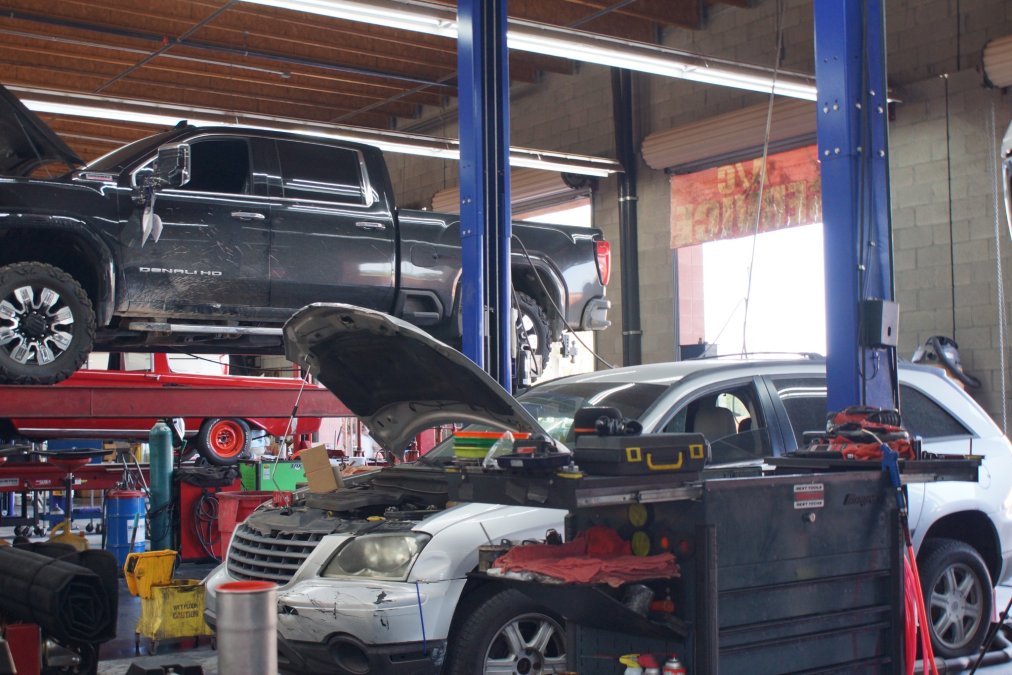
This is where a lot of drivers get burned. A code pointing at a shift solenoid can come from a failing solenoid, a chafed wire, or a valve body issue. Replacing the solenoid without testing the circuit is a guess dressed up as a repair. Our approach at American Five Star is to test first, explain what we found in plain language, and only then recommend work.
If you are searching for an auto shop near me that will actually diagnose rather than swap parts, ask one question: “Will you show me the test results?” A confident shop says yes.
Why Does My Car Vibrate When Braking?
A car that vibrates when braking usually has uneven friction surfaces on the rotors, though worn suspension components, seized calipers, and loose wheel hardware can produce similar symptoms. The vibration is a signal, and the fix depends entirely on which cause is present.
Here is how the common causes sort out:
- Warped or unevenly worn rotors: Pulsation through the pedal, often worse at higher speeds
- Seized or sticking caliper: Pull to one side, heat, and uneven pad wear
- Worn control arm bushings or ball joints: Vibration plus clunking over bumps
- Loose lug nuts or wheel bearings: Vibration that changes with speed and turning
The mistake most drivers make is replacing rotors and pads when the real culprit is a caliper that keeps dragging. The new rotors warp again within months, and the vibration returns. A proper brake diagnosis includes measuring rotor thickness and runout and checking caliper operation, not just eyeballing the pads.
Questions to Ask an Auto Mechanic Before You Approve Anything
Before you approve a repair, ask these questions. A good mechanic welcomes every one of them, and the answers tell you more about the shop than any review.
- What test confirmed this diagnosis? You want a specific answer, not “it’s a common problem on these.”
- What happens if we wait? Some repairs are safe to defer; others become far more expensive.
- Is this maintenance or a repair? The distinction affects urgency and how you plan.
- Can I see the old parts? Shops that replace parts should be willing to show them.
- What is the total out-the-door number? Parts, labor, tax, and shop supplies, in writing.
- What warranty covers this work? Get the terms before you sign.
That last question matters for transmission work in particular. If your vehicle needs transmission service, you can review what our transmission repair and service work involves before you call. Drivers with diesel-powered trucks should also know that our diesel repair covers the engine-side issues that often masquerade as transmission problems.
Never approve a repair you do not understand. If a shop cannot explain the failure in plain language and show you the evidence, that is your signal to get a second opinion.
A vibrating brake pedal, a transmission that shifts oddly, or a warning light you have been ignoring all share one thing: they get more expensive the longer they wait. If you want a shop that diagnoses before it quotes, explains before it repairs, and stands behind the work, American Five Star Auto Repair and Transmission is built for exactly that. Our ASE-certified technicians handle domestic and import vehicles, we are family-owned and operating since 1993, and we follow a no-overselling policy on every recommendation. Schedule today and get an honest answer about what your vehicle actually needs.
Frequently Asked Questions
What is considered a domestic vehicle?
A domestic vehicle is a car or truck built by a US-headquartered automaker, such as Ford, Chevrolet, GMC, Chrysler, Dodge, Jeep, or Ram. The label describes the brand’s origin, not where the parts were assembled, since most models now use global supply chains. For repair purposes, what matters is whether a shop stocks the right parts and has scan tools that read that manufacturer’s codes. At an independent shop that services both domestic and import vehicles, a domestic truck gets the same diagnostic process as any other make.
How do I choose a reliable domestic vehicle repair shop in Tempe?
Start with credentials: ASE-certified technicians, BBB accreditation, and membership in a transmission or repair trade association. Then ask how the shop handles diagnosis. A reliable domestic vehicle repair shop charges for or includes a proper diagnostic step and explains findings before quoting work, rather than guessing from a symptom. Check whether it services both domestic and import vehicles, read recent reviews for patterns about honesty and turnaround, and confirm the shop will show you the failed part. A family-owned shop operating in the same location for decades is a reasonable signal of stability.
Can an independent shop repair domestic cars and trucks?
Yes. Independent shops regularly service domestic cars and trucks, and many specialize in the transmissions and drivetrains that domestic trucks rely on. The main requirement is access to factory-level scan tools and service information for that brand, which established shops maintain. Ask directly whether the shop has the diagnostic software for your make and model and whether it has completed the same repair before. ASE certification and trade association membership, such as ATRA for transmission work, are useful indicators of capability.
Why does my car vibrate when braking?
The most common cause is uneven wear or warping on the brake rotors, which makes the pads grab unevenly and sends a pulse through the pedal and steering wheel. Other causes include a seized caliper, worn control arm bushings, a failing wheel bearing, or unevenly torqued lug nuts. Where you feel it matters: vibration in the steering wheel points to front brakes, while vibration in the seat points to the rear. A shop should measure rotor thickness and runout before recommending replacement rather than swapping parts on a guess.