November 5, 2026
What Are the Most Common Reasons for Inaccurate Diagnostics?
Last Updated: November 4, 2026
Quick Summary
The most common reasons for inaccurate diagnostics are reading the code and stopping there, skipping the basics, ignoring the driver’s description, poor communication between techs, rushing the job, knowledge gaps on a specific make or model, and failing to re-test after the repair. Inaccurate diagnostics happen when a shop settles on a code or a guess before it has actually tested the system.
- A diagnostic trouble code is a starting point, not a verdict on which part failed.
- Checking fluid level and condition, battery voltage, and connectors rules out many false positives.
- Ask which tests confirmed the diagnosis, not just which code appeared.
- A repair is not complete until codes are cleared and the symptom is verified gone.
- Get a second opinion when the recommended repair does not match the symptom.
Table of Contents
- Why Inaccurate Diagnostics Happen in the First Place
- What a Diagnostic Trouble Code Meaning Really Tells You
- How Intermittent Car Problems Diagnosis Gets Thrown Off
- The Most Common Causes of Inaccurate Diagnostics, Numbered
- How to Prevent Diagnostic Errors Before You Approve Repairs
- When to Get a Second Opinion for Car Diagnosis
- Book a Diagnostic Appointment in Tempe
- Frequently Asked Questions
Why Inaccurate Diagnostics Happen in the First Place
Inaccurate diagnostics happen when a shop settles on a code or a guess before it has actually tested the system.
A driver often arrives with a rebuilt part and the same symptom. Professional car diagnostics reveal the real cause behind a warning light, not just a code.
The research on diagnostic error in other fields backs this up. A 2024 analysis in BMJ Quality & Safety found that human factors like task planning and communication were the most common contributors to serious diagnostic mistakes.
What a Diagnostic Trouble Code Meaning Really Tells You
A diagnostic trouble code meaning is a starting point, not a verdict. The code tells you which system the computer flagged. It does not tell you which part failed.
Think of it like a smoke alarm. The alarm tells you there is smoke.
This is where many shops go wrong. For a step-by-step look at how a proper engine light diagnosis unfolds, read our guide on how to check engine light diagnostics step by step.
How Intermittent Car Problems Diagnosis Gets Thrown Off
Intermittent car problems diagnosis is hard because the fault may not show up during the shop visit. A transmission that slips once a week can test perfectly clean on a Tuesday morning.
Auto Repair In Tempe, Arizona
American Five Star Auto Repair & Transmission
Here is what throws it off:
- The fault only appears at certain temperatures
- Wiring faults come and go with vibration
- The driver describes the symptom differently than it presents
- The shop cannot reproduce the condition in a short test drive
Good technicians work around this with data, such as freeze-frame data and stored codes, and may ask you to note exactly when the problem happens. If you want to see how mechanics chase down problems like this, our team explains how do mechanics diagnose car problems in plain language.
The Most Common Causes of Inaccurate Diagnostics, Numbered
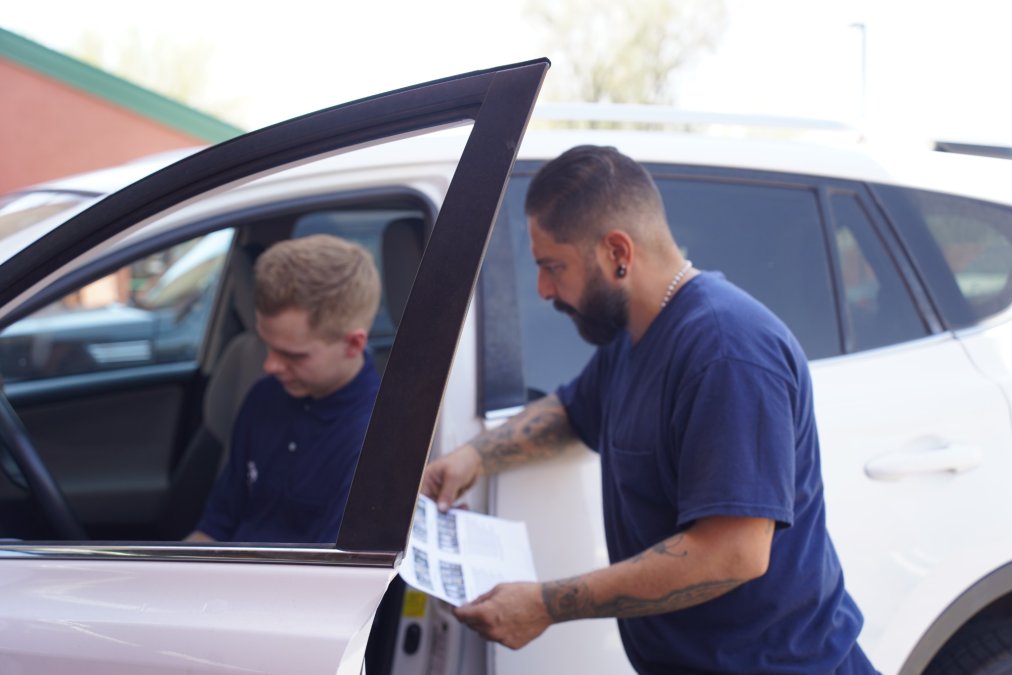
Because inaccurate readings can stem from overlooked calibration after repairs, checking for improper calibration issues in windshield ADAS systems can help distinguish sensor faults from problems introduced during service.
These are the reasons we see most often, in order of how frequently they cause a wrong diagnosis.
- Reading the code and stopping there. No testing, no verification. The scan tool reports a circuit fault; the shop replaces the part named in the code description without checking whether the circuit, connector, or ground is actually at fault. This is the most common cause by far, and it is the one that most often produces a second repair bill for the same symptom.
- Skipping the basics. Low fluid, a loose connector, a corroded ground, or a weak battery can mimic major failures. A transmission that slips because it is two quarts low will set the same code as a failing solenoid pack. Checking fluid level and condition, battery voltage, and connector condition takes minutes and rules out a large share of false positives.
- Ignoring the driver’s description. How and when the problem happens is real data. A slip that only occurs on a cold start, or only after 20 minutes of highway driving, narrows the fault to temperature-sensitive components or wiring. A shop that does not ask when the symptom appears is throwing away free diagnostic information.
- Poor communication between techs. One tech tests, another repairs, and details get lost. Communication failures are a known driver of diagnostic error across fields, as Harvard research summarized in the Harvard Gazette notes. In a shop, this shows up as a repair order that says “transmission slip” with no note about which gear, what temperature, or what the freeze-frame data showed.
- Rushing the job. Time pressure pushes techs toward the fastest guess. A proper diagnosis on an intermittent fault can require a test drive, a wiggle test on wiring, and a review of live data over time. When the bay is full, the temptation is to skip the steps that take time and go with the most likely part.
- Knowledge gaps on a specific make or model. Not every shop knows every platform. A code that means one thing on a domestic truck can point to a different known failure pattern on an import. Shops that see a wide mix of vehicles need service information and pattern-failure data to avoid applying the wrong model-specific fix.
- Failing to re-test after the repair. The fix is assumed, not confirmed. A repair is not complete until the technician clears the code, reproduces the original driving conditions, and verifies the symptom is gone and the monitor has run. Without that step, a comeback is almost guaranteed.
The National Academies review of diagnostic error lists the same core issues: knowledge gaps, weak critical thinking, poor data gathering, and failure to put the pieces together.
For patients, the practical takeaway is a short checklist you can run before you approve any repair:
- Ask which tests confirmed the diagnosis, not just which code appeared
- Ask whether the shop checked fluid, connections, and battery first
- Ask what happens if the repair does not fix the symptom
- Get the diagnosis in writing before work starts
Watch out: a shop that cannot tell you what test confirmed the diagnosis is guessing, even if the guess sounds confident.
Here are the most common reasons for a wrong diagnosis, listed in the order they most often cause one.
| Problem | Cause | Fix |
|---|---|---|
| Reading the code and stopping there | No testing or verification of the circuit | Test the circuit, connector, and ground |
| Skipping the basics | Low fluid, loose connector, corroded ground, weak battery | Check fluid, battery voltage, and connectors first |
| Ignoring the driver’s description | Not asking when and how the symptom happens | Ask when the symptom appears |
| Poor communication between techs | Details lost between testing and repair | Note gear, temperature, and freeze-frame data |
| Rushing the job | Time pressure pushes techs toward the fastest guess | Allow test drives, wiggle tests, and live data review |
| Knowledge gaps on a specific make or model | Shop does not know every platform | Use service information and pattern-failure data |
| Failing to re-test after the repair | Fix is assumed, not confirmed | Clear codes, reproduce conditions, verify symptom is gone |
How to Prevent Diagnostic Errors Before You Approve Repairs
You can prevent diagnostic errors by asking three questions before you approve any repair. This simple checklist has saved our customers real money.
- Ask what tests confirmed the diagnosis, not just what code appeared
- Ask whether the shop checked the basics first (fluid, connections, battery)
- Ask what happens if the repair does not fix the symptom
- Get the diagnosis in writing before work starts
A common mistake is approving a repair because the price feels right. A cheap fix for the wrong problem is the most expensive repair you can make. For a full walkthrough, use our checklist to avoid unnecessary car repairs.
When to Get a Second Opinion for Car Diagnosis
Use this decision guide:
- The diagnosis is inconclusive. If the shop says it cannot reproduce the problem or the code will not reset, ask for the stored and pending codes, the freeze-frame data, and a written summary of what was tested. Inconclusive is not the same as “nothing is wrong.” Ask what the next diagnostic step would be and what it would cost before you authorize it.
- Two shops disagree. Ask each shop to write down the tests it ran and the result of each test. Compare the test lists, not the conclusions. The shop that tested more of the system usually has the stronger case, and the written record lets a third technician evaluate the work without starting over.
- The symptom returns after a repair. Bring the repair invoice and the original symptom description back to the shop. A repair that does not fix the symptom is a diagnostic problem, not a parts problem, and the shop should re-test rather than replace another component on a guess.
- The symptom gets worse. A new noise, a new warning light, or a drivability change after a repair is a reason to stop driving and contact the shop immediately. Do not wait for the next scheduled visit.
A second opinion is not an insult to the first shop. It is a normal step on a complex problem, especially on transmission work where the diagnosis drives the whole repair.
Customer Jacob Massengill wrote: “They probably saved me hundreds of dollars! Thank you for the honest, quick help.”
Watch out: a second opinion that is only a price quote is not a second opinion.
Book a Diagnostic Appointment in Tempe
If your car has a warning light, a slip, or a symptom nobody has pinned down, stop guessing. Book transmission diagnostics in Tempe, AZ for slipping, hard shifting and warning lights.
When you book with us, you can expect honest recommendations with no overselling and experience with both domestic and import vehicles.
Our Transmission Service and Repair team handles transmission work in Tempe. For trucks and heavy-duty vehicles, our Diesel Repair service covers engine-side repairs.
Frequently Asked Questions
What is the most common cause of inaccurate diagnostics on a car?
The most common cause is treating a stored fault code as the answer instead of a starting point. A code tells a technician which system logged a fault, not which part failed. Skipping the verification steps, such as live data review, circuit testing, and a road test, is what turns a code reading into an inaccurate diagnosis. Poor communication of symptoms between the driver and the technician is a close second, because it sends the diagnostic process down the wrong path from the first minute.
Can a diagnostic trouble code identify the exact part that is failing?
No. A diagnostic trouble code meaning is a system-level flag, not a parts order. One transmission code can be triggered by a faulty solenoid, a wiring fault, low fluid, or a mechanical issue inside the unit. That is why a proper diagnosis includes testing the circuit and comparing live data against the manufacturer’s specifications before anything is replaced. Shops that swap parts based on the code alone are guessing, and you pay for the guess.
How can I help a mechanic diagnose my car accurately?
Bring a written log of when the problem happens: speed, temperature, weather, whether the engine was cold or warm, and any sounds or warning lights. Note whether it happens on the first start of the day or after a long drive. If the issue is intermittent, offer to leave the vehicle so a technician can test it under the conditions you described. Clear, specific symptom information is the single biggest thing a driver can do to prevent diagnostic errors.
Why might two repair shops reach different diagnoses?
Different test routines, different scan tools, and different amounts of time spent on the vehicle. One shop may read the codes and stop; another may road test, review freeze-frame data, and check the circuit. Intermittent car problems diagnosis makes this worse, because a fault that is not present during the visit can look like a different problem each time. When two diagnoses conflict, ask each shop what tests support its conclusion, then get a second opinion for car diagnosis before approving the larger repair.
A wrong diagnosis costs you time, money, and trust. American Five Star Auto Repair and Transmission gives you accurate vehicle diagnostics, transparent repair options, and a family-owned shop that has earned 481 Google reviews since 1993. Get started with American Five Star Auto Repair and Transmission and get your car diagnosed right the first time.