November 10, 2026
10 Signs You Need Transmission Repair
Last Updated: November 7, 2026
Quick Summary
The 10 signs you need transmission repair include slipping gears, delayed engagement, rough shifting, unusual noises, a burning smell, fluid leaks, and dashboard warning lights. Treat grinding noises, a strong burning smell, or a transmission that will not engage as stop-now signs and arrange an inspection immediately.
- A delay that persists after warm-up is not normal and should be checked.
- Grinding suggests metal-on-metal contact, so stop driving and have the vehicle inspected.
- Treat grinding noises, a strong burning smell, or red fluid puddles as stop-now signs.
- Schedule an inspection within a few days for rough shifting or a steady check engine light.
- Note when symptoms happen, at what speed, and whether the engine was cold or warm.
Table of Contents
- 1. Slipping Gears and Unexpected RPM Changes
- 2. Difficulty Shifting or Delayed Engagement
- 3. Rough Shifting and Vibration
- 4. Unusual Noises: Grinding, Whining, and Clunking
- 5. Burning Smell
- 6. Transmission Fluid Leak Symptoms
- 7. Dashboard Warning Lights
- 8. Early Signs of Transmission Problems You Should Not Ignore
- Frequently Asked Questions
1. Slipping Gears and Unexpected RPM Changes
If you searched for 10 signs you need transmission repair, slipping gears usually tops the list. It is the clearest signal that the transmission is losing its grip on the power your engine sends it. It is one of the most common transmission symptoms, and it rarely fixes itself.
What does slipping feel like? The engine revs climb while the vehicle barely accelerates, or the tachometer jumps between shifts for no reason. Many drivers describe it as the car “revving but not going anywhere.” That mismatch between engine speed and road speed is the transmission failing to hold a gear under load.
A common mistake is to keep driving and hope it settles. It usually gets worse. NHTSA consumer safety information notes that unresolved drivetrain faults can affect vehicle control, which is why we recommend a proper diagnosis the moment slipping starts. Our team performs transmission diagnostics in Tempe, AZ to pinpoint the exact cause before it spreads.
Watch out: ignoring early slipping can turn a minor repair into a full rebuild, so get it checked early.
2. Difficulty Shifting or Delayed Engagement
Difficulty shifting is a transmission symptom where the vehicle hesitates before engaging a gear, or refuses to engage at all. You put the car in Drive, press the accelerator, and nothing happens for a second or two. Then it lurches into motion.
Delayed engagement often points to low or degraded fluid, a failing shift solenoid, or internal pressure problems. On an automatic transmission, a pause of more than a moment between selecting a gear and feeling it engage is your cue to act. On a manual transmission, a reluctant or grinding shift can signal a worn clutch or linkage.
Here is what most guides miss: a brief delay when the engine is cold is common, but a delay that persists after warm-up is not. Note when it happens and tell your mechanic. That detail shortens the diagnostic process.
3. Rough Shifting and Vibration
Rough shifting means the transmission changes gears with a jolt, clunk, or shudder instead of a smooth transition. You may feel a thump through the seat or steering wheel. Some drivers notice a vibration that builds with speed.
Vibration can come from worn mounts, but it can also come from internal transmission trouble. The real difference between a mount issue and a transmission issue comes down to when the vibration appears. If it tracks engine RPM or specific shift points, suspect the transmission.
A common mistake is to blame tires or alignment for every shake. If the vibration is tied to gear changes, it is worth a closer look. A proper diagnosis separates drivetrain faults from suspension and tire problems so you do not pay for the wrong fix.
4. Unusual Noises: Grinding, Whining, and Clunking
Unusual noises are among the early signs of transmission problems, and each sound tells a story. Grinding suggests metal-on-metal contact. Whining that rises with speed can indicate worn bearings or low fluid. Clunking during shifts points to loose components or mounting issues.
Noises are easy to dismiss because they come and go. Do not. A transmission that whines quietly today can fail loudly next month. Pay attention to whether the sound appears in neutral, in a specific gear, or only when accelerating. That pattern helps a technician narrow the cause quickly.
If you hear grinding, stop driving and have the vehicle inspected. Continuing to drive on a grinding transmission risks further damage to internal transmission components.
5. Burning Smell
A burning smell is one of the warning signs you should never ignore. Transmission fluid that overheats smells sharp and acrid, distinct from the sweet smell of coolant or the rich smell of burning oil. If you catch that odor after a drive, your transmission may be running too hot.
Overheating degrades fluid fast, and degraded fluid stops protecting the internal parts it lubricates. In stop-and-go traffic, heat builds quickly. Left alone, a hot transmission can slip, shudder, and eventually fail.
If the smell is strong, park the vehicle and arrange an inspection. Do not simply top off the fluid and carry on. The smell is a symptom, and the cause needs diagnosis.
6. Transmission Fluid Leak Symptoms
Transmission fluid leak symptoms include red or reddish-brown puddles under the vehicle, a low fluid level on the dipstick, and a burnt smell. Fluid that looks dark or gritty is a red flag on its own.
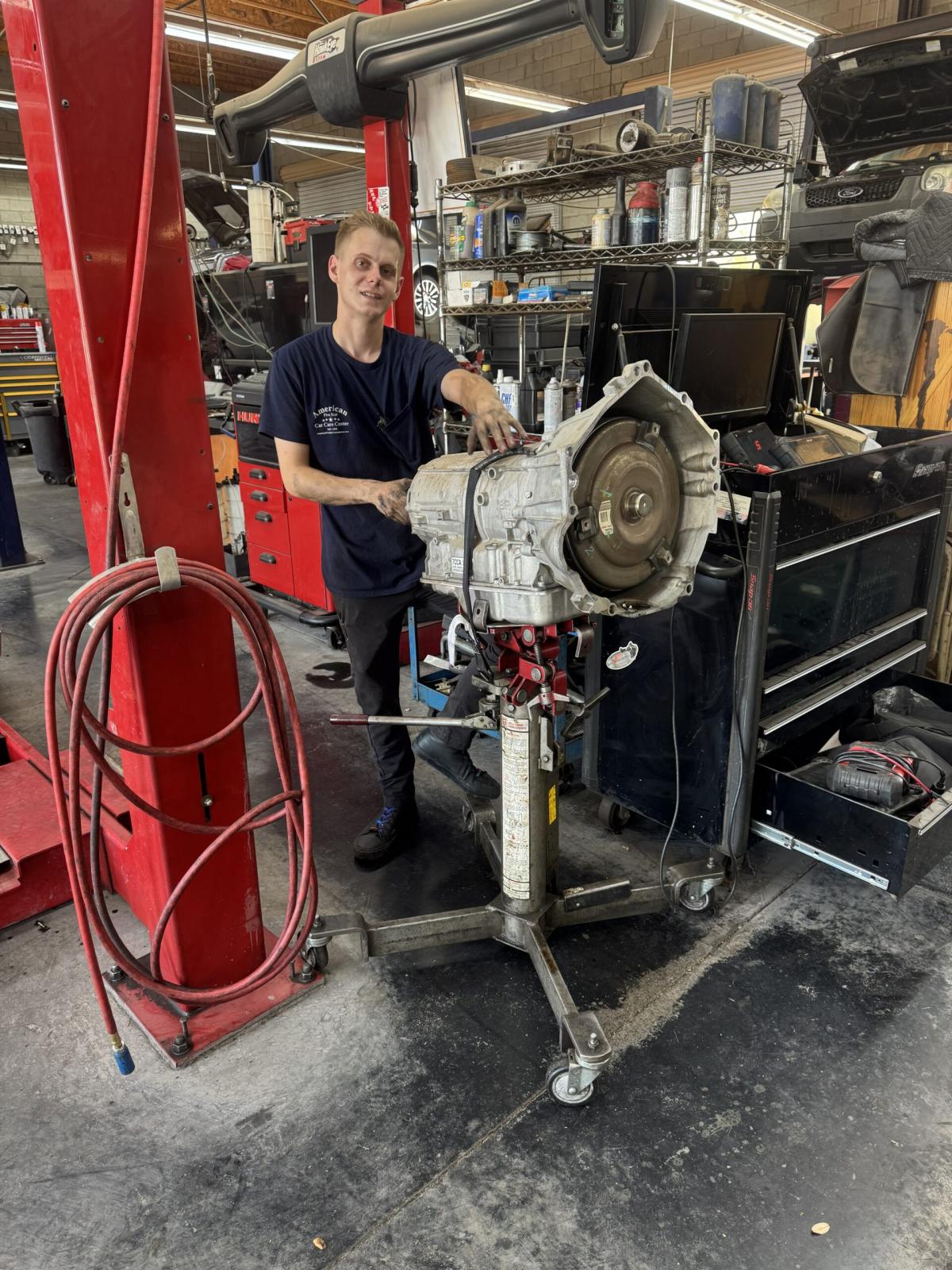
A fluid check is simple and worth doing. Park on level ground, let the engine reach operating temperature, and read the dipstick per your owner’s manual. If the level is low or the color is off, book a proper inspection. Transmission fluid service in Tempe, AZ can be discussed with the shop, including the difference between a fluid change and a flush. For a deeper look, read our guide to the signs of bad transmission fluid.
| Symptom | What It Often Means | What to Do |
|---|---|---|
| Red puddle under car | External leak | Inspect seals and lines |
| Low dipstick reading | Fluid loss or burn-off | Check level, book service |
| Dark or gritty fluid | Degraded fluid | Fluid service and inspection |
| Burnt smell with leak | Overheating | Stop driving, get diagnosed |
7. Dashboard Warning Lights
Dashboard warning lights are the vehicle’s own way of telling you something is wrong. A check engine light can store transmission-related codes, and some vehicles have a dedicated transmission warning light or a gear indicator that flashes. The light itself is not the diagnosis; it is a starting point.
Do not guess at the cause by clearing the code. A flashing light deserves immediate attention, while a steady light means schedule a diagnosis soon. The code points a technician in the right direction, but the diagnosis confirms it.
What a proper diagnosis involves matters more than most drivers realize. A technician typically scans for stored and pending codes, checks transmission fluid level and condition, and inspects for leaks and wiring damage. The goal is to separate a sensor or wiring fault from a mechanical or hydraulic problem before any parts are replaced.
That two-step approach is how you avoid replacing parts that were never the problem. It also shapes the repair choice: a solenoid or sensor fault may call for a targeted replacement, while a mechanical fault may point to a rebuild or replacement. Ask what was tested and why before approving work.
Watch out: clearing a code without diagnosing it can erase the freeze-frame data a technician needs to confirm the fault, so let the shop read it first.
8. Early Signs of Transmission Problems You Should Not Ignore
Early signs of transmission problems include slipping, delayed engagement, rough shifting, odd noises, a burning smell, leaks, and warning lights. Catching them early is the difference between a small repair and a major one, but the more useful question is what to do next. Not every symptom carries the same urgency, and treating them all the same can either waste money or risk a breakdown.
Here is how to sort what you are noticing into three practical tiers.
Stop driving and arrange a tow or immediate inspection. Treat grinding noises, a strong burning smell, a transmission that will not engage any gear, or a puddle of red fluid under the vehicle as stop-now signs. Continuing to drive can turn a seal or solenoid issue into a rebuild. If the vehicle is unsafe to move, call for a tow rather than limping to the shop.
Schedule an inspection within a few days. Delayed engagement when warm, rough shifting, a steady check engine light, or a vibration tied to shift points fit here. These symptoms rarely strand you today, but they tend to worsen and can spread damage to the transmission control module and shift solenoids. Book a diagnosis before a long trip or heavy towing.
Monitor and mention at your next service. A brief cold-start delay, a single harsh shift on a cold morning, or a faint whine that comes and goes can wait briefly, but note when they happen, at what speed, and whether the engine was cold or warm. That pattern shortens diagnosis.
Here is how transmission symptoms differ from other vehicle problems. Engine issues often show up as a rough idle or a loss of power across all speeds. Transmission trouble tends to appear at specific shift points or under acceleration. Brake and tire problems usually show up as a pull, a pulse, or a shake tied to braking or road speed rather than gear changes. That pattern matters, and it is the first thing we ask about.
If you have noticed any of these signs, do not wait for a breakdown. Transmission repair and services in Tempe, AZ are available. When you are ready, contact us to schedule today.
Watch out: driving on a failing transmission can spread damage, raising the scope of the repair.
Frequently Asked Questions
What are the top 5 signs of transmission problems?
The five most common signs are slipping gears or unexpected RPM changes, delayed or rough shifting, unusual noises like grinding or whining, a burning smell, and red or brown fluid leaks under the vehicle. A dashboard warning light often appears alongside these. If you notice any of these, schedule a transmission repair diagnosis promptly to prevent further damage.
Can you drive with signs of transmission trouble?
You can often drive short distances to a repair shop, but continuing to drive with slipping gears, grinding noises, or a burning smell can turn a minor fix into a major repair. If the vehicle refuses to engage gear or the warning light flashes, stop driving and arrange a tow. A professional inspection identifies whether the issue is urgent.
What can be mistaken for transmission problems?
Engine misfires, worn spark plugs, low engine coolant, faulty wheel speed sensors, and even loose battery connections can mimic transmission symptoms. A check engine light with codes for the transmission control module may actually stem from an electrical issue. Accurate diagnosis by a mechanic with the right scan tools prevents unnecessary transmission repair.
How do you know if a transmission problem needs immediate attention?
Immediate attention is needed if the transmission slips out of gear while driving, produces loud grinding or clunking sounds, emits a burning smell, or leaves a large fluid puddle. A flashing check engine light also signals urgency. In these cases, stop driving and have the vehicle towed to a transmission repair shop for diagnosis.